

the fifth element
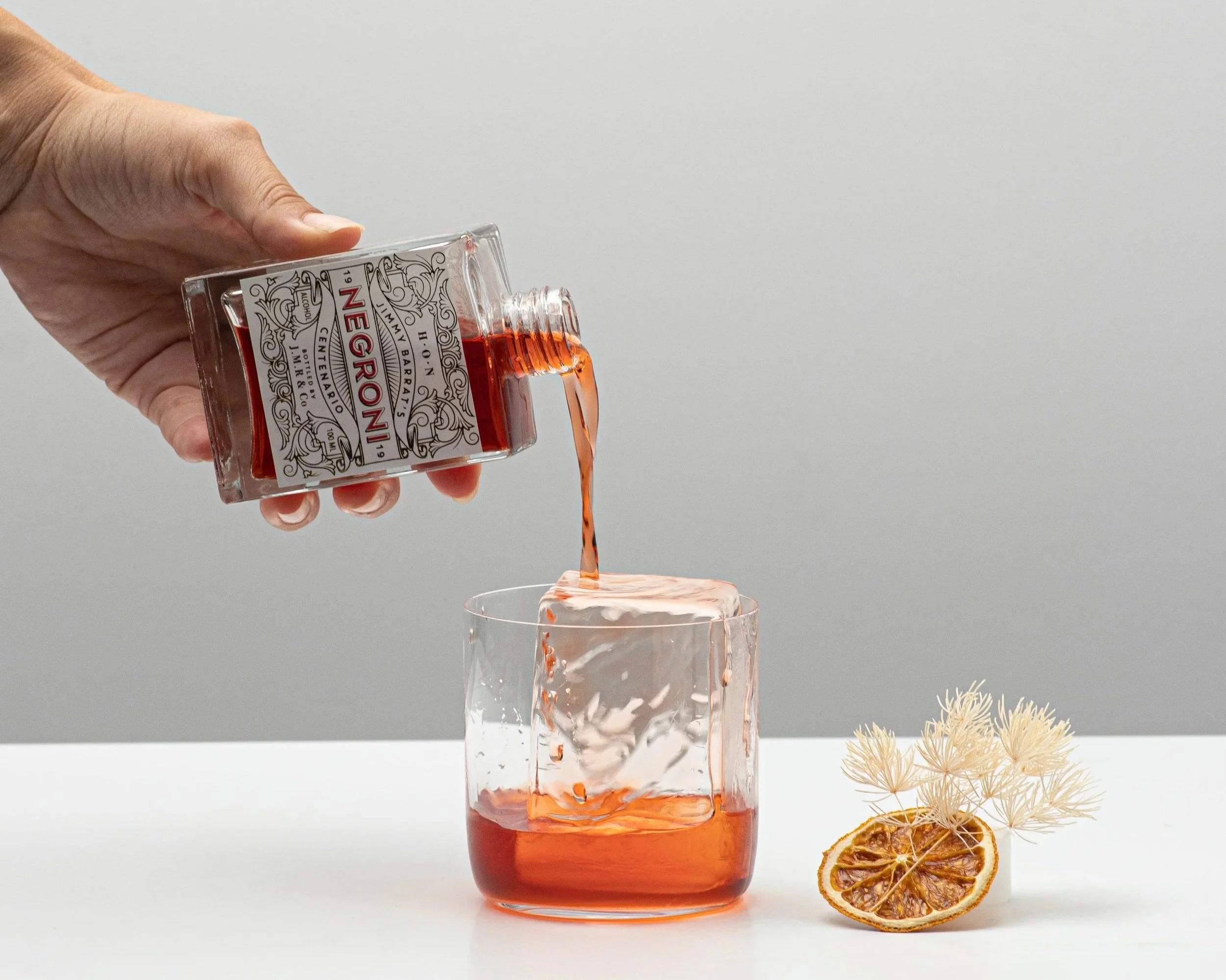
the most overlooked ingredient in a negroni.
We talk endlessly about spirits, arguing about ratios and debating the merits of one bitter over another. The provenance of vermouth, the virtue of a thicker orange slice. These are familiar conversations, and they matter. But the most decisive element in the glass should never be ignored.
Ice.
Not as an accessory. Not as temperature control. But as the fifth element. The one that decides whether a drink arrives composed or collapses halfway through itself.
In a Negroni, we can recognise four constants. Spirit. Bitter. Vermouth. Citrus. Each has a voice. Each claims its role. Ice is expected to remain silent. That expectation is the problem.
Ice determines dilution and pace. It decides whether the first sip and the last belong to the same drink or two different ones. It shapes how bitterness opens, how sweetness stretches, how alcohol softens. It does all of this quietly, without ceremony, and without credit.
Good bars understand this. Great ones obsess over it.
A single, dense cube tells you something before the drink is tasted. It signals patience. It suggests the bar has thought about the journey of the drink, not just its arrival. Cracked or cloudy ice speaks too. Sometimes of speed. Sometimes of compromise. Sometimes of a drink designed to be consumed quickly rather than lived with.
There is nothing wrong with urgency. There is something wrong with pretending it is intention.
Ice carries a philosophy of time. It reminds us that a drink is not static. It evolves. A Negroni is not made once. It is made continuously as the ice melts, as the conversation deepens, as the light shifts. The glass records the evening whether you are paying attention or not.
This is why the best Negronis are rarely rushed. They are built to last, not to impress. They assume you will sit. That you will talk. That you will not be in a hurry to move on.
Ice should be considered as a commitment. To the drink. To the guest. To the moment itself. It is a choice to allow the experience to unfold rather than peak immediately. To trust that pleasure does not need to shout.
The irony is that ice is the easiest thing to overlook and the hardest thing to correct. You can fix a ratio. You can swap a bottle. You cannot undo poor ice once the glass is poured.
Perhaps that is why it matters so much.
The fifth element does not ask for attention. It rewards it. And once you notice it, you cannot stop noticing. The weight of the cube. The clarity of the melt. The way a drink holds together until the very end.
Ice is not an afterthought. It is the quiet hand guiding everything else.
And like most things worth caring about, it works best when it is almost invisible.
Shared in Spirit