

a bitter balance
to campari or not to campari?
On tradition, taste, and whether it is acceptable to bend the rules
Every great drink carries a conversation. Some are loud, some are polite, and some reveal themselves only over time. The Negroni carries one of the longest-running conversations in the modern bar. It is not about ratios, free pouring versus measuring, garnishes, variations, or even the choice of gin. It is about Campari.
There are two positions, each stated with equal confidence. One insists that a Negroni without Campari is simply not a Negroni. The other argues that the Negroni is about balance, not brand loyalty. Both positions are persuasive. Both are incomplete.
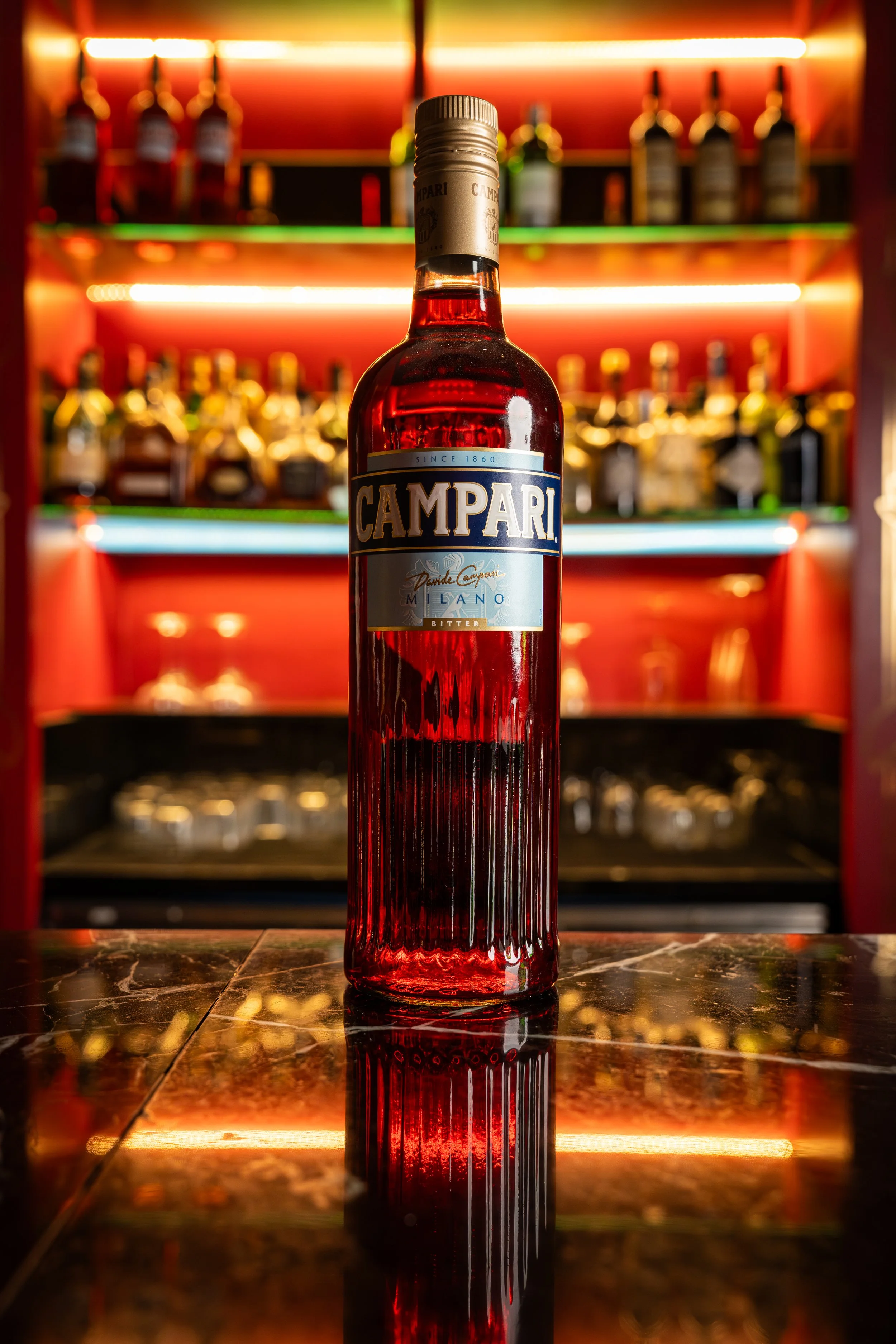
Campari shaped the Negroni. It was the original bitter used when the drink first emerged more than a century ago. Its unapologetic bitterness and unmistakable colour made the flavour recognisable, even to those who claim not to enjoy it. The bitter anchors the cocktail and gave it an identity strong enough to endure. Campari can justifiably claim its place at the centre of what we call the Classic Negroni.
But this is where the conversation becomes nuanced.
If we argue that Campari alone defines authenticity because it was present at the beginning, then logic demands further rigidity. The exact same vermouth and gin used at the time would also need to be preserved. To freeze a drink in that way would be to remove the very adaptability that allowed it to survive.
Tradition, like taste, is not static.
As the Negroni travelled, ingredients adapted. Vermouth varied by port. Gin by maker. Bitters by region. Italy itself offers a remarkable range of bitters, some predating Campari. Exploration was not an act of rebellion. It was a response to availability, preference, and place.
Even Campari has evolved. Earlier expressions were browner in tone; today’s is brighter, more cherry red. Advances in production have subtly shaped what we taste. The liquid in 1919 is not identical to the liquid poured now. Time moves forward, and so does craft. The comfort of a fixed point of origin is understandable, but it is the Negroni’s versatility that has secured its longevity.
So the answer is not binary.
A Classic Negroni, by definition, calls for Campari, a Vermouth di Torino, and a London Dry Gin. Ordering one is an act of respect to history. It anchors us to the drink’s origin.
But a Negroni made without Campari need not masquerade as a Classic. Nor is substitution an act of defiance. When done with intention, it is dialogue. A lighter bitter for the afternoon. A darker amaro at night. A local ingredient that reflects place rather than doctrine.
The Negroni is, after all, inclusive. It adjusts to the guest, the setting, and the moment. It allows structure without demanding rigidity.
Campari earned its status. It sets the benchmark and provides the reference point by which bitterness is understood. Standards matter because they allow us to recognise departure. They exist so that evolution can be measured, not prevented.
Replacing Campari is not a dilution of tradition. It is engagement with it.
The Classic remains the benchmark. The variation earns its place when it respects the balance that made the drink worth varying in the first place.
Tradition is not a rulebook. It is a body of knowledge. Once understood, the conversation truly begins.
Shared in Spirit