

fruits of the fig tree
gokan, hong kong
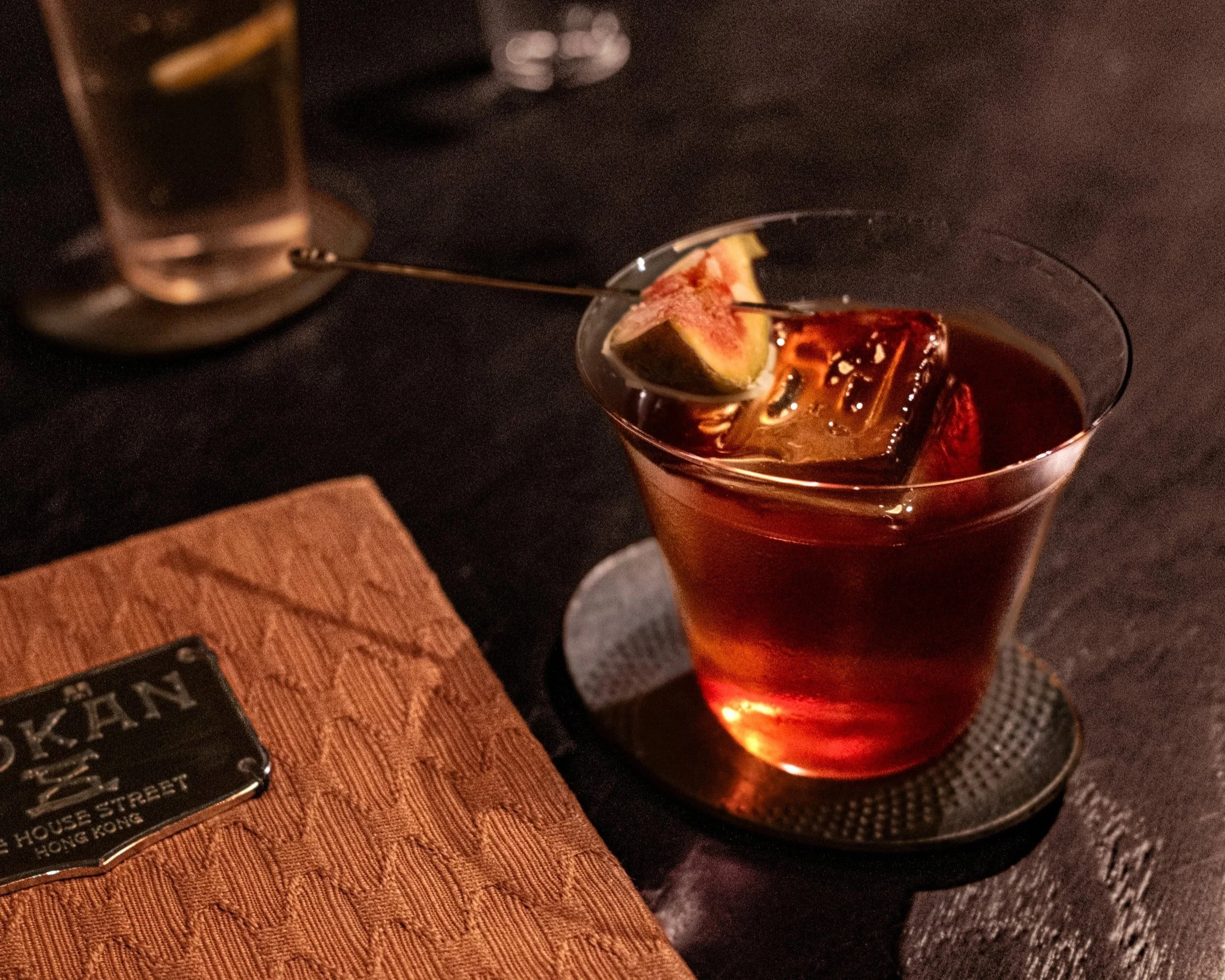
Tasting the Figroni
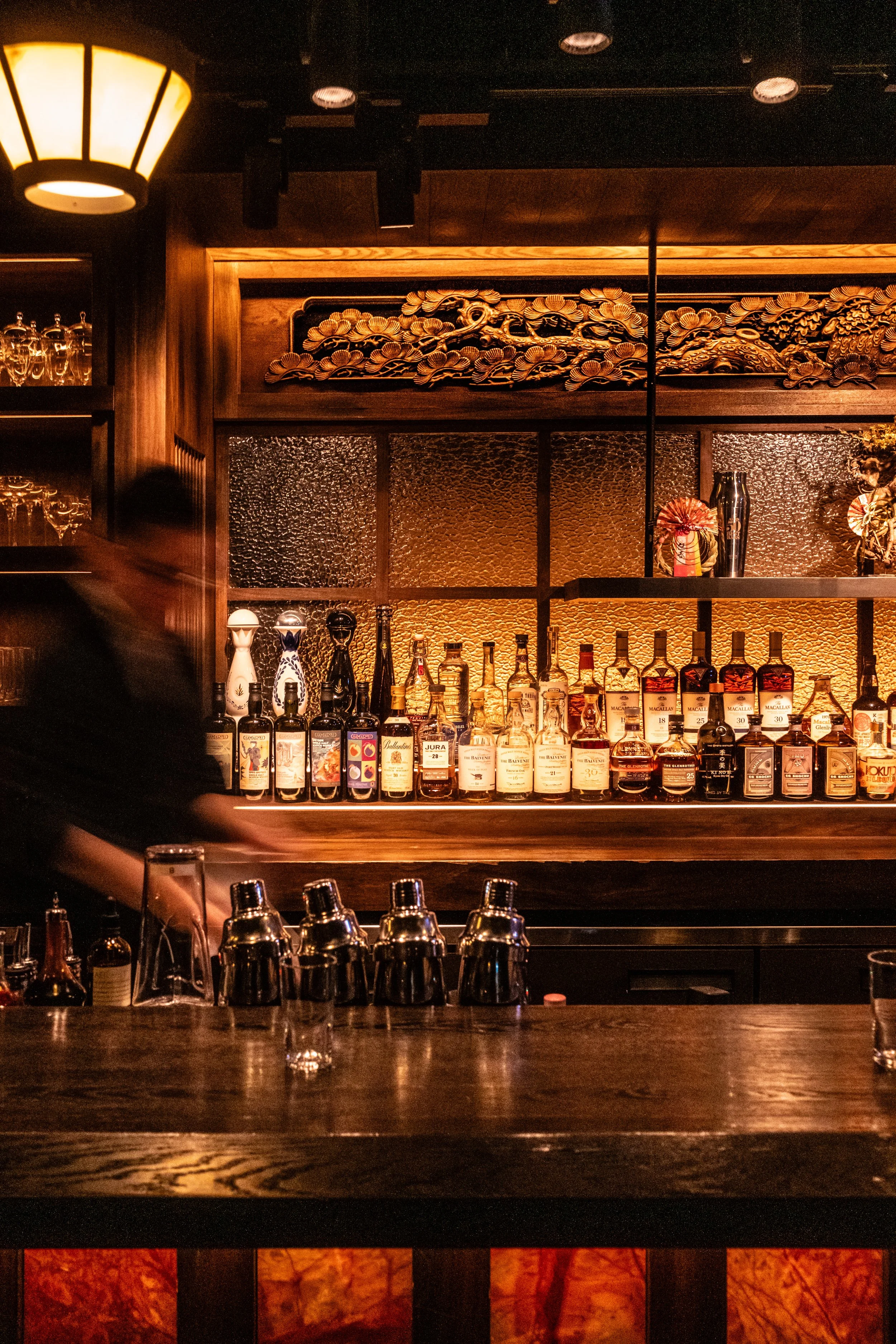
Gokan takes its name from the Japanese concept of the five senses, a reminder that drinking is not a singular act of taste, but a layered experience shaped by setting, temperature, texture, and pace. That idea runs quietly through the room. It is reinforced by the building itself, once home to Hong Kong’s first ice storage facility, a detail that feels more relevant than decorative in a bar where ice remains a structural element rather than an afterthought.
The approach here is informed by shokunin, the philosophy of sustained dedication to craft. Not as performance, but as repetition, as a discipline. It shows up in service, in how drinks are built, and in how the bar resists defining itself too narrowly as either gastronomic or classic.
The Figroni exists within this framework.
Its structure is recognisable. Gin, Vermouth, Campari. Familiar territory. Alongside them sit amontillado sherry, fig leaf, and pomegranate vinegar. Used to adjust the cocktail’s tone. The bitterness remains intact. The sweetness does not increase. The profile moves slightly toward dryness and acidity, changing the way the drink opens and settles.
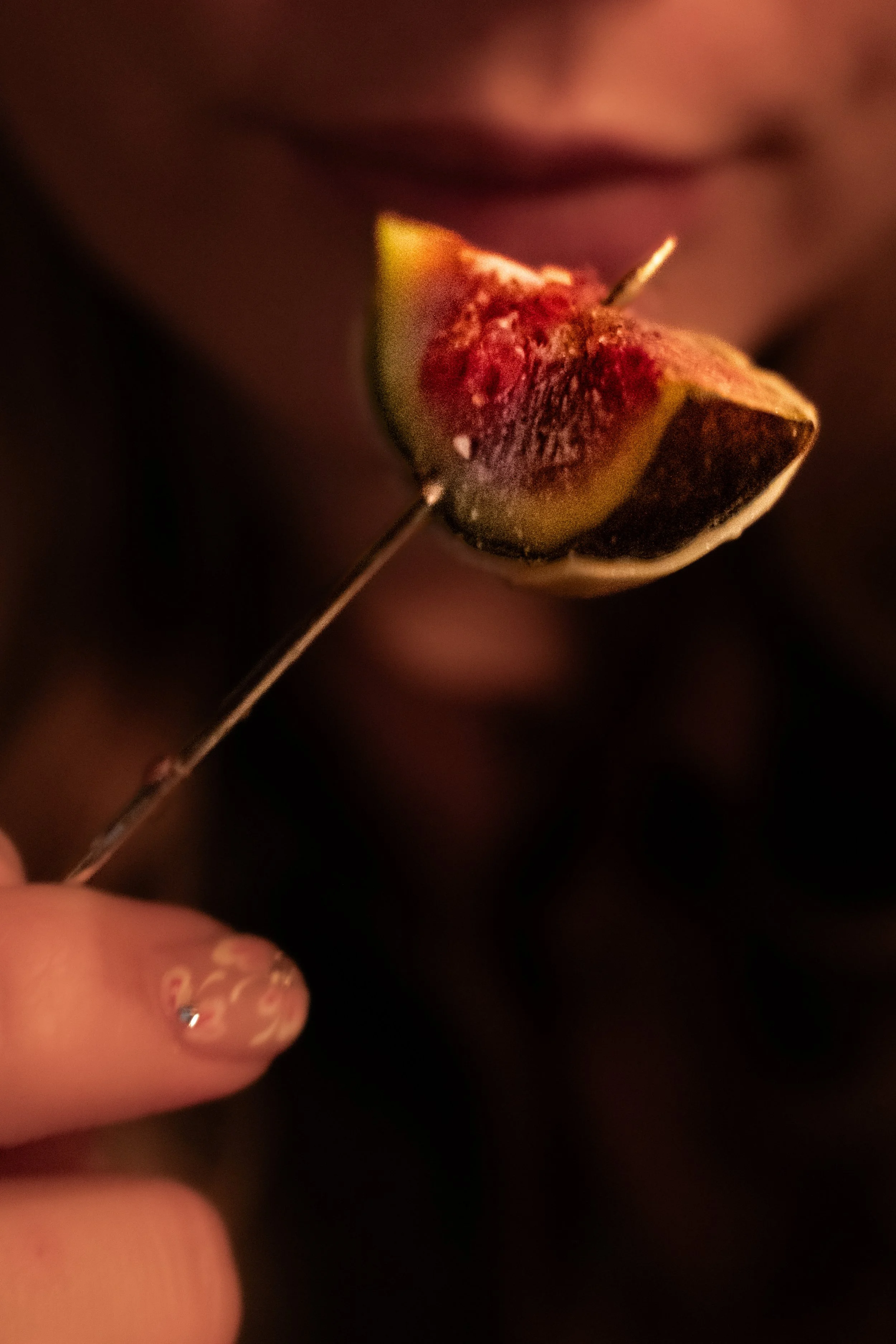
Served with a white chocolate coated fig, the presentation suggests pairing rather than garnish. The drink and its accompaniment operate separately, but in conversation.
What is interesting about the Figroni is not whether it improves on the original, but how little it tries to. It does not replace Campari or remove the tension that defines a Negroni. It simply shifts the balance point, introducing elements that reflect the broader language of the menu and the bar’s relationship with food.
This is not a Negroni designed to convert sceptics or announce innovation. It assumes familiarity. It assumes patience. It allows the drinker to decide where it sits in relation to their own idea of the classic.
In that sense, the Figroni functions less as a statement and more as a case study. An example of how the Negroni continues to adapt across cultures and kitchens without losing its core structure. How it absorbs new ingredients without the need for reinvention. How it remains recognisable even when spoken in a different accent.
At Gokan, the Figroni is one expression among many, shaped by place, philosophy, and a particular way of thinking about balance. Which may be the most honest way to treat a drink that has always been more resilient than it looks.
Shared in Spirit